Beyond the Cosmic Vacuum Cleaner
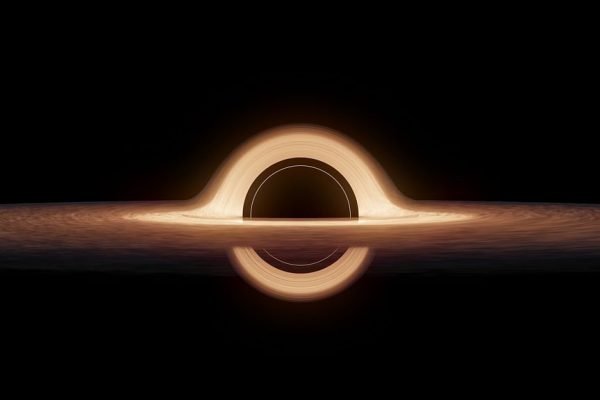
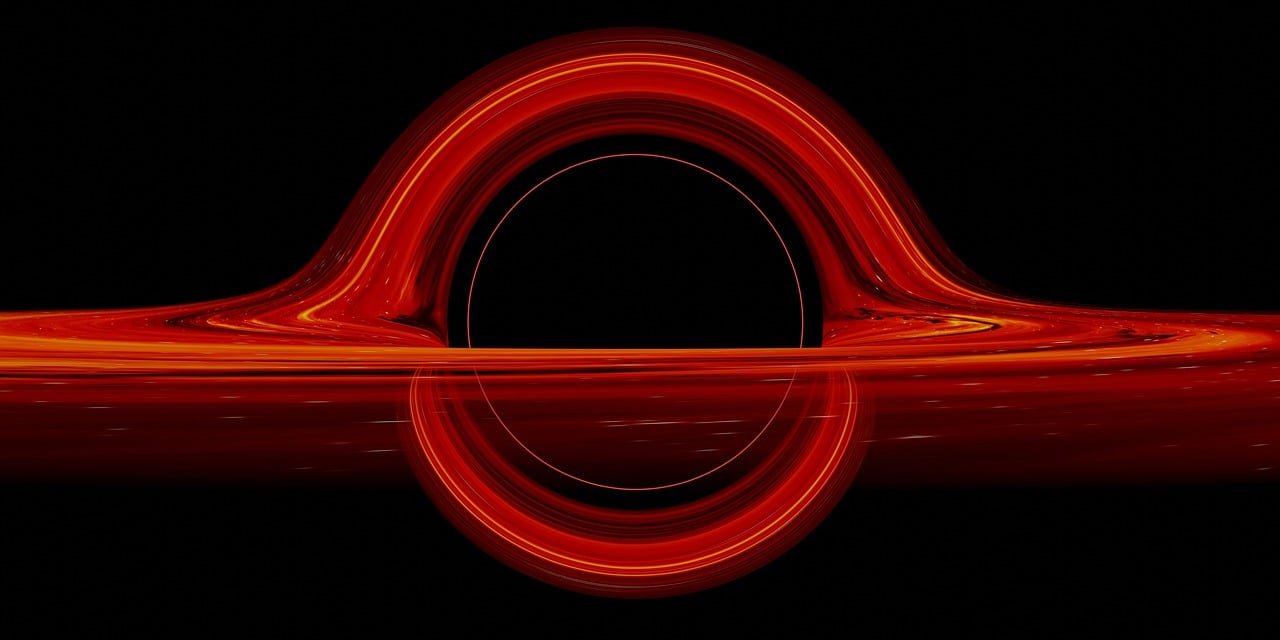
Black holes have a powerful grip on the popular imagination. We often picture them as terrifying cosmic vacuum cleaners—singular points of infinite density that indiscriminately suck in everything around them. This image, fueled by decades of science fiction, paints a simple but menacing picture of cosmic destruction. While compelling, it barely scratches the surface of the phenomenon described by Albert Einstein’s theory of general relativity.
The physical reality of black holes is far stranger, more subtle, and profoundly more counter-intuitive than fiction suggests. They are not objects in the conventional sense but extreme manifestations of gravity as predicted by General Relativity, where the fabric of spacetime itself is warped to its absolute limit. The rules that govern them challenge our everyday understanding of space, time, density, and even the nature of a “surface.”
This exploration will take you beyond the cosmic vacuum cleaner trope to reveal some of the most surprising truths that physics tells us about black holes. From their paradoxical relationship between size and density to the quiet, unnoticeable nature of their “point of no return,” these facts reveal a universe far more bizarre and wonderful than we typically imagine.
1. The Bigger They Are, The Emptier They Get
One of the most ingrained ideas about black holes is that they are infinitely, or at least unimaginably, dense. While the central singularity is theorized to be a point of zero volume and infinite density, the average density of a black hole as a whole behaves in a completely unexpected way: the more massive a black hole is, the lower its average density becomes.
In this context, “average density” is defined as the black hole’s total mass divided by the volume contained within its event horizon—the boundary known as the Schwarzschild radius. The formula derived from general relativity, ρ = 3c⁶ / (32 π G³ M²), shows that a black hole’s average density is inversely proportional to the square of its mass (1/M²). This isn’t an empirical observation; it’s a direct mathematical consequence of applying Einstein’s field equations to the volume defined by the event horizon. This means as you double the mass, the average density drops by a factor of four.
The consequences of this scaling law are astonishing:
- A black hole with the mass of our Sun would have an average density of approximately
1.85 x 10¹⁹ kg/m³, a number so enormous it defies comprehension. - A supermassive black hole, however, can be surprisingly “fluffy.” A black hole with the mass of 4.3 billion suns would have an average density equal to that of ordinary water. The volume enclosed by the event horizons of the most massive black holes has an average density lower than that of many main-sequence stars.
This shatters the simplistic image of all black holes as universally hyper-dense objects. It reveals a bizarre reality where adding mass makes the overall object, as defined by its event horizon, progressively emptier.
——————————————————————————–
2. You Can Cross the Point of No Return Without Noticing
The phrase “point of no return” conjures images of a violent, dramatic threshold. Near a small black hole, this is true. The intense tidal forces would stretch any object vertically while compressing it horizontally, a gruesome process aptly named “spaghettification.” For a stellar-mass black hole, an astronaut would be torn apart by these forces long before ever reaching the event horizon.
This astonishing difference is a direct consequence of the scaling law we saw earlier: the immense mass of a supermassive black hole creates an event horizon so large that its curvature at any given point is incredibly gentle. For a supermassive black hole, the journey is completely different. The tidal forces at the event horizon are so gentle that an astronaut could drift across it without feeling any immediate squashing or pulling. They could pass the point of no return completely unscathed and utterly unaware that they had just sealed their fate.
This survival is, of course, temporary. Once inside the event horizon, the fabric of spacetime is warped so intensely that the future itself points only in one direction: toward the central singularity. The radial coordinate becomes timelike, meaning that moving toward the center is as inevitable as moving forward in time. There is no turning back, no possibility of escape.
The profound implication is that for the largest black holes, the event horizon is not a physical wall or a violent boundary. It is a quiet, invisible threshold in spacetime. You wouldn’t see it, feel it, or hear it. You would simply cross a line beyond which all paths lead to the center, and the outside universe is lost to you forever.
——————————————————————————–
3. Anything Can Become a Black Hole (If You Squeeze It Hard Enough)
Black holes are not formed from a special, exotic substance. They are a consequence of gravity, born from ordinary matter under extraordinary conditions. General relativity tells us that every object with mass has a Schwarzschild radius—a specific radius to which it must be compressed for its own gravity to become so strong that its escape velocity equals the speed of light, thus forming a black hole.
This isn’t a property reserved for giant stars; it applies to everything. The numbers are simply mind-boggling:
- The Sun: To become a black hole, our Sun, with its current radius of nearly
700,000 km, would need to be compressed into a sphere with a radius of only3 km. - The Earth: Our planet, with its radius of about
6,400 km, would need to be squeezed down to a tiny sphere with a radius of just8.87 mm(about0.35 inches). - A Human: A 70 kg person has a Schwarzschild radius, but it is astronomically small: just
1.04 x 10⁻²⁵ m.
For ordinary objects, their physical size is vastly larger than their Schwarzschild radius, so they remain stable. A black hole is formed only when a very massive star (greater than the Tolman-Oppenheimer-Volkoff limit of about 2.2 to 2.9 solar masses) exhausts its nuclear fuel, the outward push from fusion that has supported it for millions of years ceases, and it collapses under its own immense gravity. If the collapsing core is massive enough, nothing can halt its contraction until its physical radius shrinks inside its Schwarzschild radius. At that moment, an event horizon forms, and it disappears from the observable universe.
This concept reveals that a black hole is not defined by what it’s made of, but by the relationship between its mass and its size. It is a universal consequence of mass, density, and the laws of general relativity.
4. Nothing Ever Actually Falls In (From Our Point of View)
One of the greatest paradoxes in physics involves a simple question: What do you see when you watch something fall into a black hole? The answer depends entirely on your perspective, and it reveals the strange nature of time in a strong gravitational field.
Because of an effect called gravitational time dilation, time for a distant observer runs infinitely slowly at the event horizon. As you watch a spaceship, for example, approach a black hole, you would see it appear to slow down. Its light would become increasingly stretched to longer, redder wavelengths. As it got closer and closer to the event horizon, its motion would seem to grind to a halt. It would appear to “freeze” at the boundary, getting dimmer and redder until it fades from view, but never actually crossing. From your perspective, it would take an infinite amount of time for the spaceship to reach the horizon.
For the astronauts on the spaceship, however, the experience is completely different. Their clocks would tick normally, and their journey across the event horizon would take a finite, and often very short, amount of their own proper time. They would pass right through the boundary without any sense of freezing or infinite delay.
This was a concept even Albert Einstein wrestled with. In a 1939 paper, he noted:
“Further it is easy to show that both light rays and material particles take an infinitely long time (measured in “coordinate time”) in order to reach the point r = μ/2 (the Schwarzschild radius in the notation of the time) when originating from a point r > μ/2”.
This is a profound illustration of relativity. There is no single, absolute “now” in the universe. The fate of the falling object—whether it is frozen in time for eternity or passes swiftly into oblivion—is fundamentally different depending on who is doing the observing.
5. The “Surface” of a Black Hole Isn’t a Surface at All
It’s common and convenient to refer to the event horizon as the “surface” of a black hole, but this informal description is deeply misleading. Unlike the surface of a planet or star, the event horizon is not a physical, tangible boundary that you could touch or stand on. It is a pure creation of warped spacetime.
The event horizon is a mathematical surface—a one-way membrane. If you were falling toward a large black hole, you would not see or feel anything as you crossed it. There is no matter, no energy, and no physical structure located at the horizon itself.
The event horizon is not a physical object – if you were falling through it you wouldn’t even notice it was there.
So, what is it? The event horizon represents the precise location where the curvature of spacetime becomes so extreme that all possible future paths for any particle or light ray point inward, toward the central singularity. It is the literal boundary defining the region from which escape is impossible. It isn’t a place; it is a point of no return defined by the geometry of spacetime itself.
6. The Point of No Return Was First Understood as a Mathematical Glitch
When Karl Schwarzschild derived the first exact solution to Einstein’s field equations in 1916, his mathematics produced a bizarre result. The equations seemed to “blow up”—resulting in infinities—at a specific distance from the central mass, a distance that would come to be known as the Schwarzschild radius. For decades, the nature of this singularity at r = rs was a subject of intense debate. Physicists were not sure if it represented a real physical barrier or something else entirely.
The answer turned out to be one of the subtle triumphs of theoretical physics. The problem at the event horizon is what’s known as a “coordinate singularity.” This is not a real, physical break in spacetime but rather an illusion created by a poor choice of mathematical coordinates. It’s like trying to use a standard north-south-east-west coordinate system at the Earth’s North Pole; the system breaks down and becomes useless, but the Pole itself is a perfectly smooth piece of geography. The problem is with the map, not the territory.
It wasn’t until physicists developed more sophisticated mathematical toolkits in the 1920s and 30s, through the work of pioneers like Lemaître and Eddington, and even more rigorous analysis in the 1960s, that the true nature of the r = rs singularity was revealed as a coordinate artifact. They showed that by changing the mathematical “map,” the event horizon could be crossed smoothly. In contrast, the singularity at the center of the black hole, at r = 0, is considered a “genuine” physical singularity, where our current laws of physics cease to apply.
This history is a powerful reminder of how scientific understanding evolves. Even the giants of physics had to wrestle with the strange and counter-intuitive implications of their own theories before the true, and even stranger, nature of the event horizon was understood.
7. Stars Have a “Puffiness” Limit Before They Inevitably Collapse
Most are familiar with the idea that a massive star collapses into a black hole when it runs out of fuel. But general relativity imposes another, more subtle limit on stellar stability that is purely based on how compact a star is. A lesser-known but critical prediction of General Relativity is that a stable star cannot have a radius smaller than 9/8 (or 1.125 times) its own Schwarzschild radius.
This means that if a star becomes too compact—if its matter fills more than about 88% of the volume defined by its Schwarzschild radius—it becomes unstable to radial oscillations and will inevitably collapse into a black hole. This is true no matter what internal pressures, such as neutron degeneracy pressure, are working to hold it up.
This “puffiness” limit is distinct from the Tolman-Oppenheimer-Volkoff (TOV) limit. The TOV limit defines the maximum mass a non-rotating neutron star can have before it collapses (around 2.2 to 2.9 solar masses). The 9/8 rule, on the other hand, is a stability limit based on a star’s compactness—the ratio of its physical radius to its Schwarzschild radius. A star could be well under the TOV mass limit but still collapse if it were squeezed into a small enough volume.
This represents a fundamental tipping point imposed by general relativity. It is a line in the sand for cosmic objects: stay “puffy” enough, and you can remain stable; become too compact, and complete gravitational collapse is an absolute certainty.
Conclusion: The Universe’s Strangest Prediction
The reality of black holes, as described by the laws of physics, is profoundly weirder and more wonderful than the simple science-fiction tropes we are used to. They are not just cosmic monsters, but laboratories for the most extreme physics in the universe, where our intuitions about reality break down. From giants with the density of water to points of no return you could cross without noticing, they embody the deepest and most counter-intuitive predictions of general relativity.
The truths we’ve explored reveal a universe governed by subtle and elegant rules that challenge our common sense at every turn. Yet, for all we have learned, the greatest mystery remains shielded behind the event horizon. While this boundary protects us from the singularity, what new physics might we need to truly understand the point where spacetime itself ends, and what secrets about the universe’s origins and fate might be hiding there?