Artificial intelligence is revolutionizing education like never before. With 92% of students now using AI tools compared to just 66% in 2024, it’s clear that AI has become an essential part of modern academic life. Whether you’re struggling with writing assignments, need help with complex mathematical problems, or want to streamline your study process, AI tools can significantly boost your productivity and academic performance. In this article, the top 5 AI tools for students have been discussed in detail.
The global AI in education market has exploded from $5.88 billion in 2024 to a projected $32.27 billion by 2030, growing at an impressive 31.2% CAGR. This rapid growth reflects the transformative impact these tools are having on how students learn, study, and succeed academically.
Why AI Tools Are Game-Changers for Students
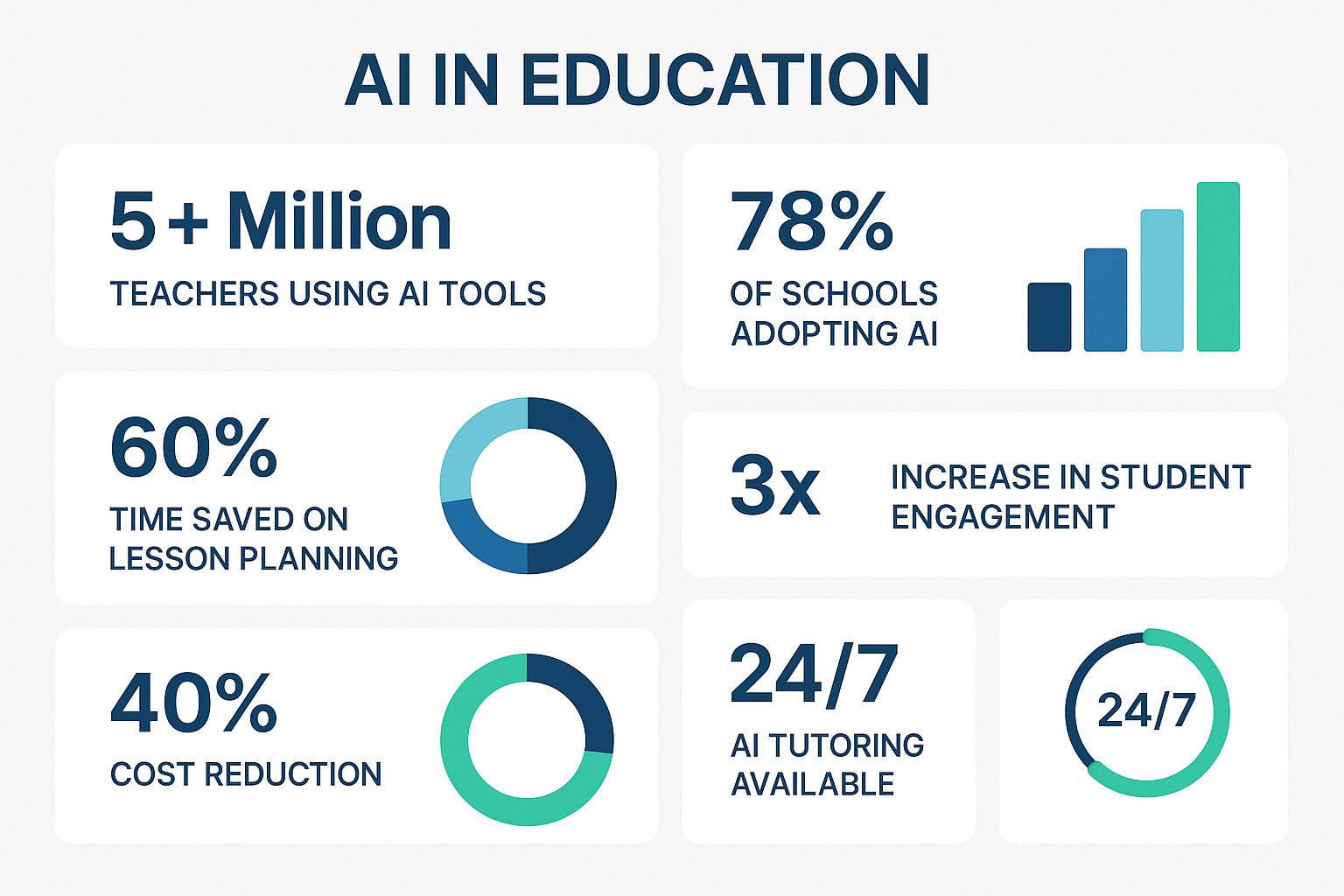
Before diving into our top 5 picks, it’s essential to understand why AI tools have become indispensable for modern students. Research shows that 78% of students perform better when they receive personalized feedback, and AI tools excel at providing this individualized support.
Key benefits of AI tools for students include:
- Time Efficiency: AI processes information and generates content in minutes rather than hours
- Personalized Learning: Tools adapt to individual learning styles and pace
- 24/7 Availability: Get help anytime, anywhere without waiting for office hours
- Error Reduction: Minimize mistakes in writing, calculations, and research
- Cost-Effective: Many powerful features are available for free or at low cost
Top 5 AI Tools Every Student Should Use in 2025
1. ChatGPT – Your Ultimate Study Companion
ChatGPT stands out as the most versatile AI tool for students, with 23% of children aged 11-17 having used it. Developed by OpenAI, this conversational AI can assist with virtually any academic task.

- Essay and report generation with proper structure and citations
- Step-by-step problem solving for complex mathematical and scientific concepts
- Code debugging and programming assistance for computer science students
- Language translation and grammar correction
- Personalized tutoring across multiple subjects
- Research assistance and literature review support
Best Use Cases:
- Breaking down complex topics into understandable explanations
- Generating ideas for essays and research papers
- Creating study guides and summaries
- Getting instant answers to academic questions
- Learning programming languages
Pricing: Free tier available with GPT-3.5; ChatGPT Plus ($20/month) offers GPT-4 access with advanced features.
Student Success Story: Studies show that students using ChatGPT for homework assistance report significant reduction in study hours alongside an increase in GPA, suggesting positive academic outcomes when used appropriately.
2. Grammarly – Perfect Your Academic Writing
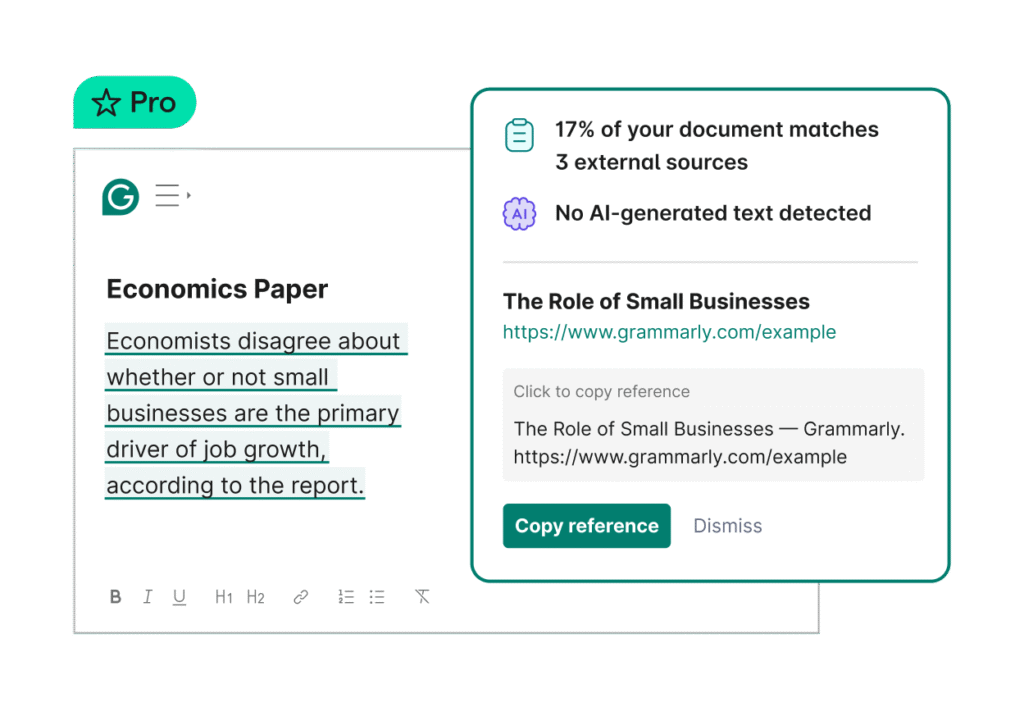
For students looking to improve their writing skills, Grammarly is essential. This AI-powered writing assistant helps ensure your academic papers are error-free and professionally written.
Key Features:
- Advanced grammar, punctuation, and style suggestions
- Plagiarism detection for academic integrity
- Tone and clarity improvement for better readability
- Integration with Google Docs, MS Word, and other platforms
- Writing performance insights and progress tracking
- Citation assistance for academic papers
Academic Applications:
- Research papers and thesis writing
- Email communication with professors
- Cover letters and resumes
- Creative writing assignments
- Peer review feedback
Pricing: Free version offers basic grammar checking; Premium ($12/month) includes plagiarism detection and advanced writing suggestions.
Why Students Love It: Grammarly’s real-time suggestions help students learn from their mistakes, making it not just a correction tool but a learning platform that improves writing skills over time.
3. QuillBot – Master the Art of Paraphrasing
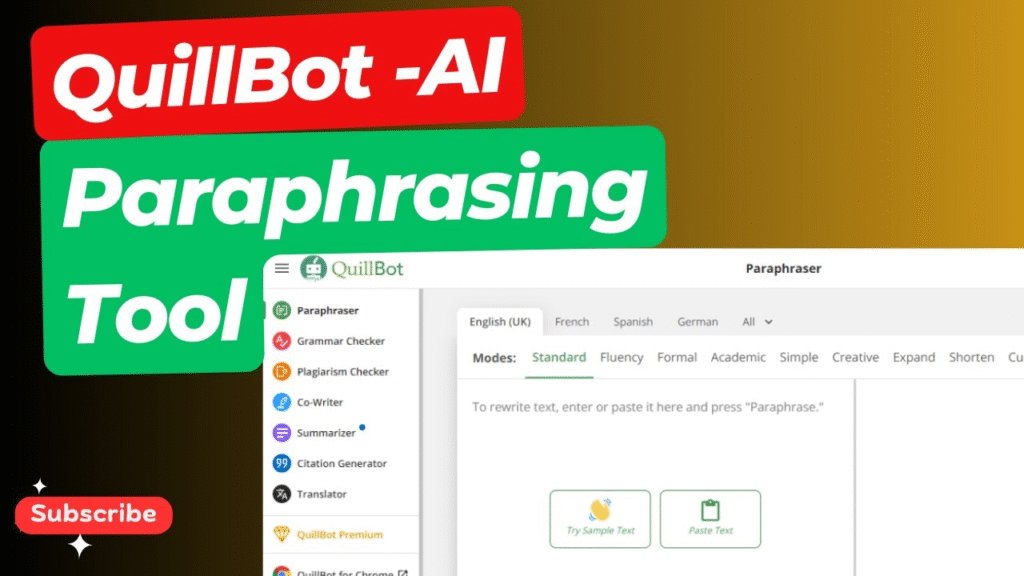
QuillBot has become the go-to paraphrasing tool for students, processing over 2,000 new users every hour. This AI-powered platform helps students avoid plagiarism while improving their writing clarity and style.
Standout Features:
- AI-powered paraphrasing with multiple writing modes (Standard, Fluency, Creative, Academic)
- Summarization tool for long articles and research papers
- Citation generator for APA, MLA, and Chicago styles
- Grammar checker integrated into the platform
- Plagiarism checker for academic integrity
- Translation support for 30+ languages
Academic Benefits:
- Rewording complex source material while maintaining original meaning
- Improving sentence structure and vocabulary
- Creating multiple versions of the same content
- Summarizing lengthy research articles
- Generating proper citations automatically
Pricing: Free version allows 125 words at a time; Premium ($9.95/month) offers unlimited paraphrasing and advanced modes.
Research Insight: QuillBot’s AI uses advanced natural language processing to ensure paraphrased content maintains academic quality while avoiding plagiarism concerns.
4. Wolfram Alpha – Your Computational Powerhouse
For STEM students, Wolfram Alpha is an indispensable computational knowledge engine that provides step-by-step solutions to complex mathematical and scientific problems.
Computational Capabilities:
- Step-by-step mathematical solutions for algebra, calculus, and statistics
- Scientific calculations including physics, chemistry, and engineering problems
- Data analysis and visualization for research projects
- Unit conversions and measurement calculations
- Graph plotting and equation solving
- Statistical analysis and probability calculations
Subject Coverage:
- Mathematics (all levels from basic arithmetic to advanced calculus)
- Physics and engineering calculations
- Chemistry molecular analysis
- Statistics and data science
- Economics and finance
- Nutrition and health data
Educational Value: Unlike simple calculators, Wolfram Alpha shows the complete solution process, helping students understand how to solve problems rather than just getting answers.
Pricing: Free version with basic computations; Pro ($5/month for students) offers step-by-step solutions and enhanced features.
Student Impact: Wolfram Alpha is particularly valuable for students who need to show their work, as it provides detailed explanations for every calculation step.
5. Socratic by Google – Your Photo-Based Homework Helper
Socratic by Google revolutionizes homework assistance by allowing students to simply photograph their questions and receive comprehensive explanations powered by Google AI.
Innovative Features:
- Photo recognition for handwritten and typed problems
- Voice input for verbal questions
- Multi-subject support including Math, Science, History, and Literature
- Step-by-step explanations rather than just answers
- Educational resource curation from trusted sources
- Visual learning aids and concept explanations
Subject Support:
- Mathematics: Algebra, Geometry, Trigonometry, Calculus
- Sciences: Biology, Chemistry, Physics, Earth Science
- Humanities: History, Literature, Social Studies
- Languages: Grammar, vocabulary, reading comprehension
Learning Approach: Socratic emphasizes understanding concepts rather than providing quick answers, partnering with educators to create expert-designed study guides.
Accessibility: Completely free and available on both iOS and Android, making it accessible to all students regardless of economic background.
Student Feedback: Users appreciate that Socratic provides extensive yet relevant resources rather than overwhelming them with too many options.
Comparison Table: Top 5 AI Tools at a Glance
| Tool | Primary Function | Best For | Free Version | Premium Cost |
|---|---|---|---|---|
| ChatGPT | Conversational AI Assistant | General academic help, writing, research | ✅ Limited | $20/month |
| Grammarly | Writing Enhancement | Grammar, style, plagiarism detection | ✅ Basic features | $12/month |
| QuillBot | Paraphrasing & Writing | Rewriting, summarizing, citations | ✅ 125 words limit | $9.95/month |
| Wolfram Alpha | Computational Engine | Math, science, engineering problems | ✅ Basic calculations | $5/month (student) |
| Socratic by Google | Photo-based Help | Quick homework assistance | ✅ Completely free | N/A |
How to Choose the Right AI Tool for Your Needs
For Writing-Heavy Courses (English, History, Communications):
- Primary: Grammarly + QuillBot combination
- Secondary: ChatGPT for idea generation and research
For STEM Subjects (Math, Physics, Chemistry, Engineering):
- Primary: Wolfram Alpha for calculations
- Secondary: Socratic for quick concept clarification
- Tertiary: ChatGPT for explaining complex theories
For General Academic Support:
- Start with: ChatGPT for versatility
- Add: Socratic for quick homework help
- Consider: Grammarly for any writing tasks
For Research-Intensive Projects:
- Primary: ChatGPT for research assistance
- Secondary: QuillBot for paraphrasing sources
- Essential: Grammarly for final editing
Best Practices for Using AI Tools Academically
Do’s:
- Use AI as a learning aid, not a replacement for understanding
- Verify information from AI tools with authoritative sources
- Cite AI assistance when required by your institution
- Combine multiple tools for comprehensive support
- Review and edit AI-generated content before submission
Don’ts:
- Don’t submit AI-generated content without review and citation
- Avoid over-dependence – develop your own skills alongside AI assistance
- Don’t ignore academic integrity policies regarding AI use
- Don’t assume AI is always correct – always fact-check important information
The Future of AI in Student Education
The statistics paint a clear picture: AI adoption in education is accelerating rapidly. With 88% of students now using AI for assessments (up from 53% in 2024) and the AI education market expected to reach $30.28 billion by 2029, these tools are becoming integral to academic success.
Emerging Trends for 2025:
- Personalized AI tutors that adapt to individual learning styles
- Real-time feedback systems for immediate course correction
- AI-powered study groups for collaborative learning
- Predictive analytics to identify and address learning gaps
- Voice-activated study assistants for hands-free learning
Key Predictions:
- 97 million AI-related jobs will be created by 2025
- 63% of organizations plan to adopt AI within three years
- AI will contribute $15.7 trillion to the global economy by 2030
Maximizing Your Academic Success with AI
The key to success with AI tools isn’t just knowing which ones to use, but understanding how to integrate them effectively into your study routine. Research shows that students who combine AI assistance with traditional study methods achieve the best outcomes.
Weekly Study Integration Plan:
- Monday: Use ChatGPT to break down weekly assignments and create study schedules
- Tuesday-Thursday: Apply Wolfram Alpha for problem-solving and Grammarly for writing tasks
- Friday: Use QuillBot to paraphrase research sources and create summaries
- Weekend: Employ Socratic for quick reviews and concept clarification
Academic Integrity Considerations:
While 61% of educators are already using AI tools for teaching, it’s crucial to maintain academic integrity. Always check your institution’s AI policy and be transparent about your AI usage when required.
The landscape of education is evolving rapidly, and students who embrace these AI tools while maintaining ethical standards will have a significant advantage in their academic journey. These five tools – ChatGPT, Grammarly, QuillBot, Wolfram Alpha, and Socratic by Google – represent the best of what’s currently available, combining power, accessibility, and educational value.
As we move further into 2025, the integration of AI in education will only deepen. Students who learn to leverage these tools effectively today will be better prepared for the AI-enhanced workplace of tomorrow. The key is to use these tools not as shortcuts, but as sophisticated assistants that enhance your learning, improve your skills, and help you achieve your academic goals more efficiently than ever before.